

Do you know how many table olive varieties exist and what their characteristics are? ⭐ At Aceitunas Chicón Lebrón, besides offering you the opportunity to buy olives, we explain everything you need to know! Read on now! ✅
As we’ve mentioned on previous occasions, olives are a fundamental part of the Mediterranean diet and the quintessential appetizer in our country, whether in bars, restaurants, or at home. Currently, Spain is the main producer and exporter of various table olive varieties in the world. Therefore, today at Aceitunas Chicón Lebrón, we want to write about the varieties of table olives and their characteristics.
Table olives are the fruit of specific cultivated olive varieties, harvested at the right stage of maturity. They are a high-quality product with good preservation.
The different varieties of table olives have a fairly high and balanced nutritional value. They are rich in minerals, especially Calcium, Iron, Provitamin A, and Vitamin C. Additionally, due to their high fiber content, these products are very digestive.
Process of Making Table Olive Varieties
Do you know the generic process for making table olive varieties? We summarize it in 7 steps:
- Harvesting the olives from the tree and transporting them in boxes.
- Washing line to remove impurities.
- Sorting the olive varieties by size or caliber. Only the largest, undamaged ones are used.
- Placing the olives in barrels with water and the ingredients used for seasoning to enhance flavor.
- After a period, depending on the seasoning of each, they are ready to be packaged, following another check of size and quality.
- The containers with the olives and their water are placed in a hot water “bath”. This pasteurizes them and allows for natural preservation for about two years without any stabilizers or preservatives.
- Finally, the containers are labeled. The label must at least contain the expiration date, the contents, and the production batch.
This is the generic process used for the production of various table olive varieties. Once these steps are completed, they are ready for distribution.
Table Olive Varieties
Lastly, we want to talk about the 4 most typical table olive varieties in this country.
Table Olive Varieties: Manzanilla
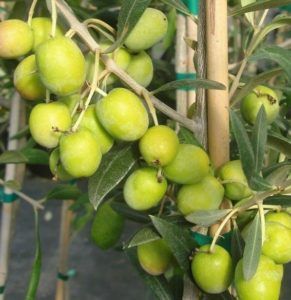
The Manzanilla table olive variety is internationally renowned due to its productivity and the high quality of the fruit. This type of olive has a high pulp-to-pit ratio and a fairly acceptable oil content when processed for oil production.
At Aceitunas Chicón Lebrón, we offer this variety of table olives: Manzanillas stuffed with anchovy, Manzanillas stuffed with pepper, and Manzanillas stuffed with gherkin.
Table Olive Varieties: Gordal
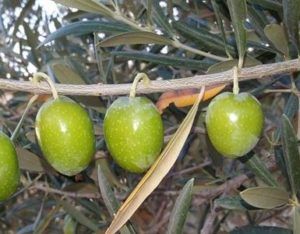
The Gordal olive variety is particularly noted for its size, with an average weight of 12.5g. It is typically cultivated in the lower regions of Andalusia. The oil content is low, so it is mainly consumed as a seasoned olive.
You can also find this variety in our catalog among all the split table olives we offer. Some examples are: Gordal with anchovy flavor, Gordal stuffed with gherkin, and Gordal homemade style.
Table Olive Varieties: Hojiblanca
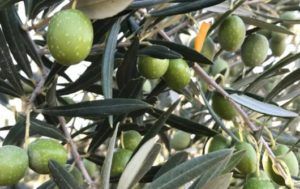
This is a late-ripening olive that is mostly cultivated in the provinces of Malaga, Granada, Seville, and Córdoba. It is highly valued for making black olives and brined olives. They are usually violet to black in color and of large size and high quality.
Table Olive Varieties: Cacereña
Lastly, among the table olive varieties, we find the Cacereña, similar to the Manzanilla but usually lighter in color. It is mainly used for making seasoned black olives.
At Aceitunas Chicón Lebrón, we offer a wide catalog of table olive varieties and pickles. Take a look at our online catalog and discover the wide variety of quality products we have.
Rate this article about Table Olive Varieties
 (Ninguna valoración todavía)
 Loading...